The method
What is posture correction Pilates?
Posture correction Pilates uses Pilates exercises to change how a person stands, sits and moves. Instead of one set sequence for everyone, each session starts from an assessment of that person, and ends by measuring again.
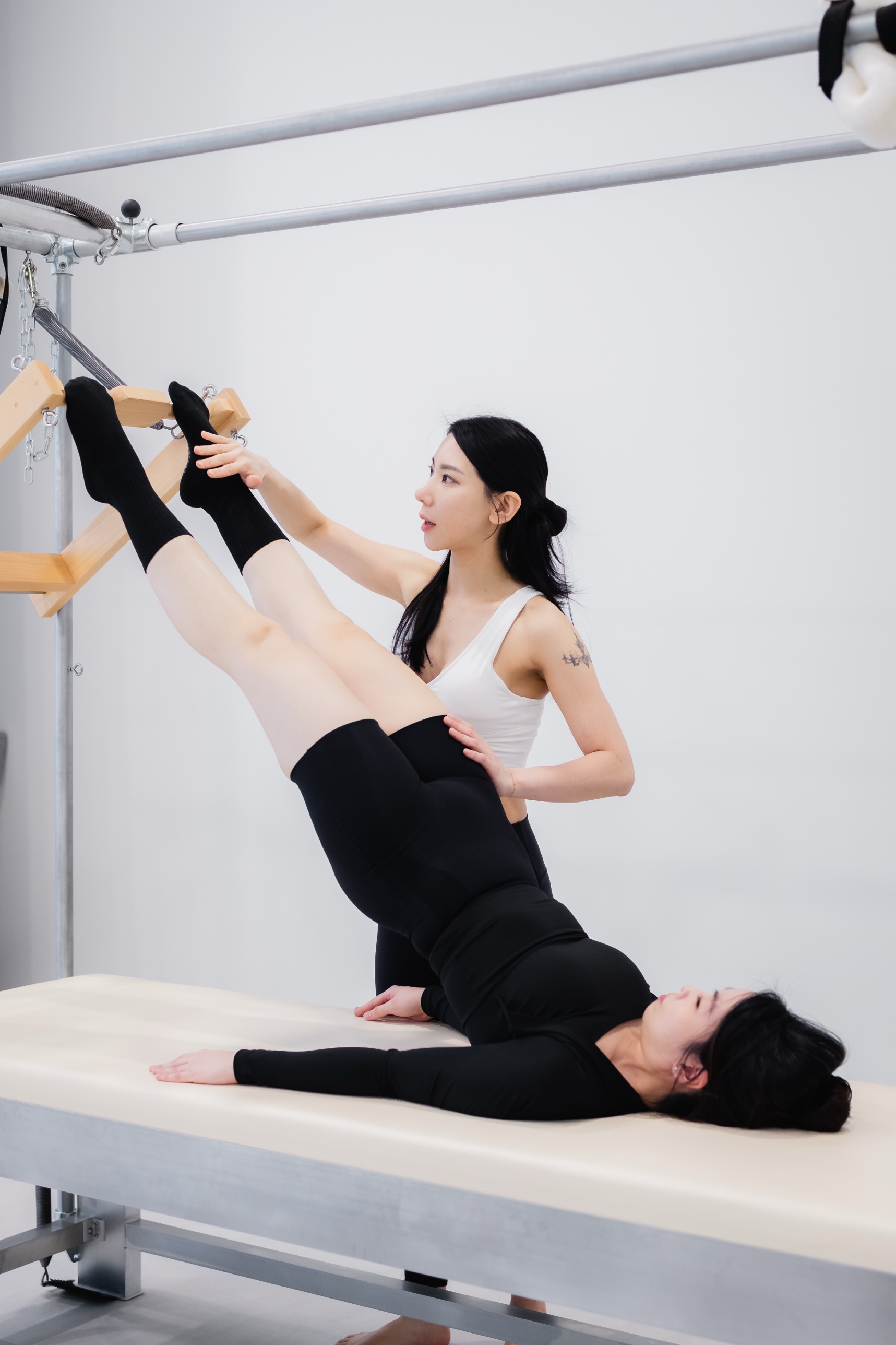
The H7 protocol
Four steps, every session.
The H7 Posture Correction Association in Seoul teaches this order to every instructor, in Korea and in Malaysia.
Assess
Look at standing posture, watch movement, and test range of motion (ROM) and muscle strength (MMT).
Analyse
Find where the problem starts. Neck tension can begin at the shoulder blades, knee strain at the foot.
Move
Choose mat and apparatus exercises that fit what the assessment found.
Re-check
Assess again, so the client and the instructor can both see the change.
The difference
Set sequence or assessment first.
What it looks at
12 posture topics.
These are the posture topics H7 instructors learn to assess and work with, from the feet up.
- 01Foot
- 02Bowleg and knock-knee
- 03Femoral anterior glide
- 04Pelvis
- 05Lumbar and cervical disc
- 06Spondylolysis and spondylolisthesis
- 07Flat back and kyphotic posture
- 08Forward head posture and turtle neck
- 09Scoliosis
- 10Clavicle and scapula
- 11Humeral anterior glide
- 12Superior glide (shoulder impingement)
Who it is for
People who want to move better.
Office workers with rounded shoulders or a forward head. People coming back to exercise after a break. Older adults who want to keep moving well. People with back or neck discomfort, alongside their doctor or physiotherapist where needed.
Posture correction Pilates is exercise. It does not replace medical diagnosis or treatment.
For instructors
Learn to teach posture correction Pilates in Malaysia.
The H7 Pilates Instructor Course in Petaling Jaya teaches this protocol across 126 hours, with every apparatus and no more than 8 students in a batch. Working instructors can add one body area or client group at a time through the specialist workshops.
Talk to us